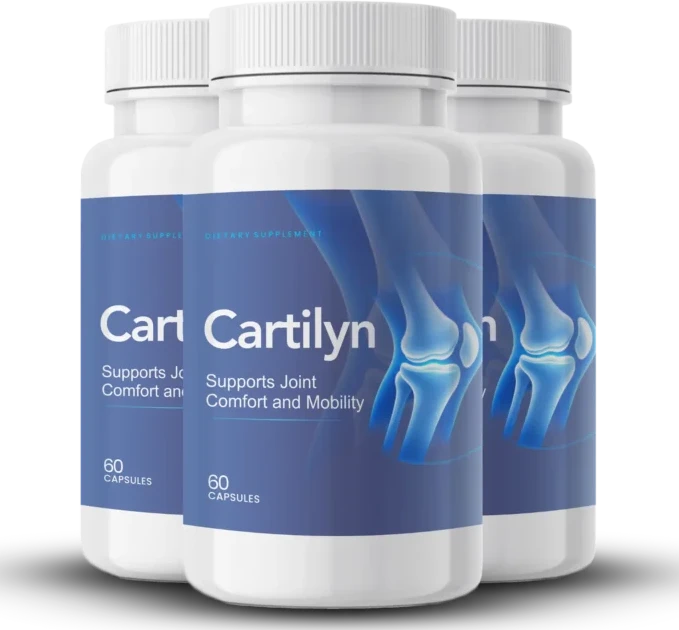
A supplement label is a small document packed with information, and most of us only glance at the front. Spend five unhurried minutes with the bottle and you will learn far more. This walkthrough uses a simple order of inspection that works on any product, including Cartilyn, and finishes with a checklist you can reuse.
Step one: the front panel
Start where the manufacturer wants your eyes to land. On a Cartilyn bottle the front shows the product name, a joint graphic and the line "Supports Joint Comfort and Mobility". That phrase is a structure-function statement, which describes how a nutrient-style product is meant to support normal body function rather than naming any condition.
Also look for the count. Cartilyn bottles hold 60 capsules, and the front of the bottle usually tells you the format and quantity in a corner. Knowing the count helps you compare one bottle with another on equal terms.
Look at the colours and the layout as well. A tidy label with plenty of white space tends to be easier to read, and an easy-to-read label is one you are more likely to actually study. Cartilyn uses a clean blue and white design for exactly that reason.
Finally, check the style of the claims. Calm, modest wording is a good sign. Dramatic promises deserve a closer look.
Step two: the Supplement Facts panel
Turn the bottle around and find the boxed panel titled Supplement Facts. This is the heart of the label. It lists what each serving holds, along with the serving size, in a standard format that regulators require.
This site never reproduces that panel, because the bottle is the complete and current authority. Reading it in person ensures you see precisely what the manufacturer printed for the batch in your hand.
Pay attention to the serving size line at the top, because every figure below it refers to that serving. Many shoppers compare two bottles without noticing that their serving sizes differ, which makes the comparison meaningless. Matching like for like is the whole trick.
Read the panel from top to bottom, slowly, and keep a pencil nearby. If you want to learn how the panel is organised, the NIH Office of Dietary Supplements explains the format at ods.od.nih.gov.
Step three: the small print beneath
Under the panel you will usually find a line of other ingredients, such as the capsule shell and the components that help the capsule form. Most people skip this line, yet it is the part that tells you exactly what else is in the bottle.
Check the order of that line too. Components are generally listed by weight, from the largest to the smallest, which gives you a rough sense of what makes up most of the capsule. If a word is unfamiliar, jot it down and look it up in a reference book or on a trusted site.
You may also see a statement about allergens or processing. Read it in full if it matters to you or to someone you shop for. It is part of the label for a reason.
Step four: directions for use
The directions for use tell you how the product is meant to be taken. They are brief, but they are the most important sentences on the bottle. Follow them exactly as printed.
This is why our articles never quote amounts or schedules: the label is current, printed and in your hands. Whatever you read online, including here, the bottle wins every time.
Pay attention to any mention of meals, water or timing. These small phrases shape how the capsule fits into your day, and they are easy to overlook on a first pass. Reading them twice costs nothing.
Underline the directions with a pencil if the print is small, or take a photograph on your phone so you can enlarge it at the kitchen table.
Step five: badges and origin
Finally, look at the badges and origin statements. The brand states four for Cartilyn, and each one is worth understanding in plain terms rather than as a decorative sticker. Badges are the brand's own statements, so regard them as starting points for your reading, not the end of it. The Supplement Facts panel and the directions for use still carry the weight, and the badges simply round out the picture of how the bottle was produced.
Origin statements are often tucked near the bottom of the label in small type. A quick scan with a magnifying glass or your phone camera usually finds them.
- Made In USA
- FDA Registered
- GMP Certified
- Natural Product
A reusable checklist
Copy this onto an index card and carry it when you shop for any supplement. Front panel: is the wording modest and clear? Count: how many capsules or pieces are in the bottle? Supplement Facts: have I read the whole panel? Other ingredients: do I understand each line? Directions: can I follow them as printed? Badges: do I know what each one means?
For general consumer background on how these products are described, the FDA keeps a helpful hub on dietary supplements.
Our overview of capsules for daily wellness and the label details page pair well with this checklist, and the plain guide to Cartilyn shows the same steps applied to our own bottle. When you are ready to try the product, you can order Cartilyn today and run your checklist on the bottle itself.